Say goodbye to counting errors, omissions, and blind spots—Besta delivers a fully integrated, intelligent packaging solution tailored for life science consumables.
Release time:
2025-10-09 11:32
Source:

Addressing industry pain points: The EP tube's four major challenges in backend packaging—manual counting errors and omissions, blind spots in air-tightness sampling inspections, missed detection of visual defects, and downtime caused by switching between multiple specifications—have been tackled by Bestar’s automated microcentrifuge tube packaging machine, which offers four core solutions. Let every bag of centrifuge tubes achieve near "zero errors, zero missed detections, and zero human-induced mistakes."
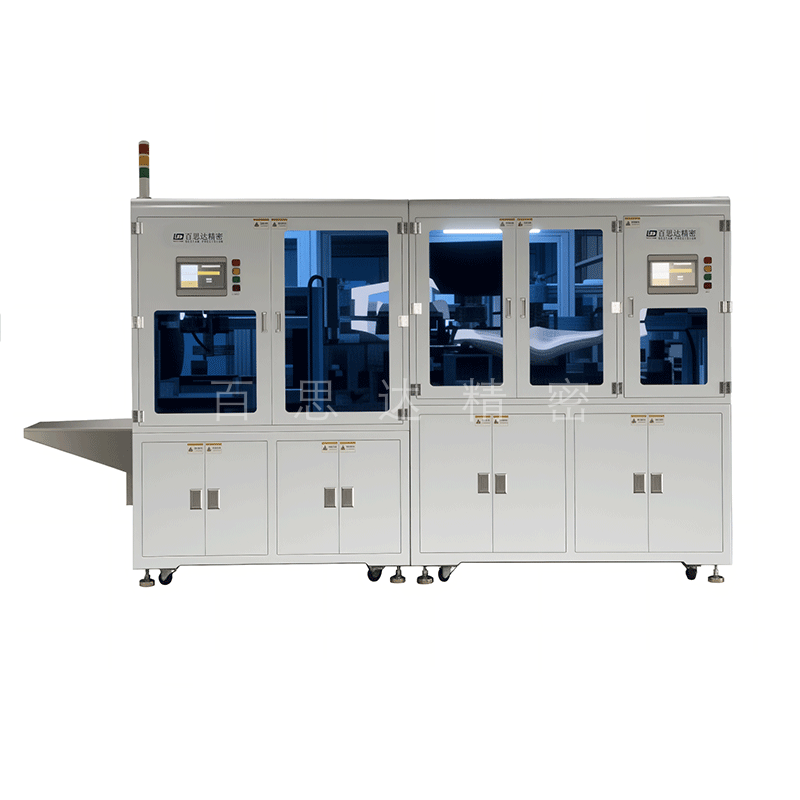
01 Equipment Introduction
(1) Functions
The robotic arm operates in sync with the injection molding machine's cycle, featuring a 0-meter buffer, and is used for counting, packaging, and inspecting tiny centrifuge tubes.
(2) Principle
PLC Intelligence The brain coordinates everything, seamlessly integrating negative-pressure airtightness, AI-powered vision, counting-and-bagging functionality, and real-time linked thermal sealing for material dispensing—creating a closed-loop system. It continuously monitors for defects and contamination indicators, dynamically adjusting the number of bags produced to ensure each bag precisely meets the required standards.
(3) Advantages
① Fully automated operation: Once the set quantity is reached, the product is automatically bagged and sealed, reducing the complexity and potential errors associated with manual techniques.
② Multi-channel parallel strategy (16 vacuum channels + 4 CCD detection channels), delivering an ultra-fast production capacity of 6,000 PCS/H while ensuring both speed and quality.
③ Equipped with a visual deep learning AI system, it achieves all-dimensional recognition and can accurately identify six types of defects.
④ Compatible with mixed production of multi-specification products.
02 Technology Applications
Scene 1: Fully Automated Factory – High-Speed Bagging of Multi-Size Small Bags
Advantages: The fully automated production system seamlessly integrates with customers' injection molding machines via an intelligent docking module. After the robotic arm of the injection molding machine directly loads the materials, products are swiftly conveyed to the automated production line at a high speed of 6,000 pieces per hour. The system is equipped with a precise counting module, allowing flexible parameter settings based on order requirements—options include packing quantities of 200, 250, 300, 400, or 500 units per bag. Once the centrifuge tubes reach the preset count, the system automatically initiates the bagging process and performs infrared heat sealing. By replacing manual counting and packaging steps with fully automated operations, this system effectively eliminates human error risks inherent in traditional manufacturing methods, ensuring product diversity while significantly enhancing packaging accuracy and production stability.
Scene 2: Reducing Costs, Boosting Efficiency—Focusing Firmly on Production Quality
Advantages: Breaking away from the traditional single-piece inspection model, this innovative system adopts an integrated air-path series-parallel technology, enabling simultaneous testing of 16 products in a single cycle. While maintaining detection accuracy at or above the 99.90% pass rate standard, it significantly reduces both the per-unit product testing time and the equipment occupancy costs. Compared to conventional industry solutions, this system features a unique parallel processing architecture that cuts inspection labor hours by more than 220%, offering a cost-effective quality assurance solution ideal for large-scale production.
Scene 3: Biomedical Laboratory – High-Precision Requirements
Advantages: This visual inspection system employs an AI algorithm based on vision-based deep learning to achieve comprehensive, intelligent identification of bottle cap sealing integrity (bubbles, insufficient adhesive), cap completeness (black spots, contamination), and bottle body appearance (scratches, poor scale markings, surface contamination). Through continuously updated machine learning models, the system can accurately distinguish between six types of defects, maintaining a stable detection accuracy of ≥99.99%. This ensures that every finished product leaving the factory meets stringent quality standards.
Scene 4: Mixed-Regimen Production – 1.5 mL & 2.0 mL Compatible on the Same Track
Advantage: Utilizing multi-specification dynamic adjustment technology, this system achieves seamless production compatibility for both 2.0ml and 1.5ml centrifuge tubes through the coordinated control of an adaptive fixture system and an intelligent sensing module.
03 Case Studies
A leading biotech consumables company in East China took the lead in May by introducing an automated microcentrifuge tube packaging machine, and after three months of operation, key performance indicators have significantly improved.
1. Qualified rate increases
The average pass rate for manual visual inspection is 98%, while after AI-powered full inspection was implemented, the rate has stabilized at 99.95%, with defective products being automatically removed online.
2. Workforce Streamlining
The original process requires four people working together— Detection, bagging, sealing, and handling Currently, only one person is needed for scheduled inspections, saving three operators and increasing staff utilization by 75%.
3. Save Space
Old-line materials piled up in the passageway, making secondary contamination almost unavoidable. Meanwhile, Bestar’s mini-sized automatic packaging machine for microcentrifuge tubes—measuring just 3.6 m × 1.2 m—has unveiled the long-hidden passageway once again. With this innovative solution, materials no longer fall to the ground or get stacked on top of each other, instantly elevating the cleanliness level. Finally, the factory environment is breathing smoothly again.
Microcentrifuge Tube Automatic Packaging Machine It is a revolutionary solution that streamlines the entire workflow of centrifuge tube packaging—from material loading, inspection, bagging, to sealing—effectively addressing the long-standing core challenges in laboratory consumables: high labor costs, expensive space requirements, and frequent customer complaints. By doing so, it creates significant economic value for customers and serves as a powerful testament to Bestar Precision Machinery's commitment to driving the intelligent and efficient advancement of life science consumables.
Press recommend
On the first day of the event, Booth M49 in Hall 8.1 immediately entered “crowd mode.” Customers from all over the country in the IVD and medical consumables sectors flocked to the booth, creating a vibrant and energetic atmosphere.
Exhibition Preview | Bestar Invites You to Join Us at CMEF – Booth M49, Hall 8.1
As a leading industry benchmark in China’s medical device sector—boasting top-tier scale and far-reaching influence—the 2026 China International Medical Equipment Fair (CMEF) is set to open with great fanfare at the Shanghai National Exhibition and Convention Center. With more than a decade of deep expertise in the precision manufacturing of biomedical machinery, Baisida Precision Machinery, a nationally recognized high-tech enterprise, will once again make a major appearance at this premier industry event. The company will showcase five core, independently developed automated systems, comprehensively demonstrating its robust capabilities in IVD in vitro diagnostics and the precision manufacturing of medical consumables. We warmly invite industry peers, as well as new and existing customers, to visit our booth to explore emerging opportunities and discuss the future of the industry together.
On February 11, the second day of the 2026 Arab International Medical Laboratory Instruments and Equipment Exhibition (WHX Labs 2026) kicked off at the Dubai World Trade Center, and booth H3.B39—located in the heart of the exhibition hall—continued to gain momentum.
WHX Labs 2026 | The First Exhibition of the Year—A Wonderful Start
From February 10 to 13, 2026, the Arab International Medical Laboratory Instruments and Equipment Exhibition (WHX Labs) will grandly open at the Dubai World Trade Center in the United Arab Emirates. As the largest laboratory equipment event in the Middle East, this year’s exhibition brings together over 800 leading medical enterprises from more than 40 countries worldwide, once again highlighting its status as an authoritative benchmark for technological innovation and industry trends in the global IVD sector.
The packaging and bagging process for traditional medical anesthesia masks has long been plagued by four major issues: bags sticking together, difficulties in automated bag retrieval, high rates of bag damage during insertion, easy detachment of UDI codes, and uneven sealing strength leading to compromised air-tightness. Each defective mask packaging not only erodes the already slim profit margins of enterprises but also increases the risk of product traceability and reduces the yield of good-quality products every time a UDI code comes loose or a sealing failure occurs. Moreover, every single handling step further diminishes production capacity.
Time flies, and the first month of 2026 has quietly arrived, bringing with it the warmth of the New Year. Looking back at the year 2025 that we’ve just bid farewell, as the challenges and opportunities in the IVD industry have intertwined and settled over time, we’ve chosen to embark on a heartwarming journey of gratitude and growth in Ganzhou, the ancient Song Dynasty city steeped in history. This is not merely a simple trip; it’s a carefully planned reunion of souls—a chance for us to rediscover the true meaning of partnership and gather the strength needed to move forward, amidst the green bricks and dark-tiled roofs of this ancient city and atop the misty peaks of Sanbai Mountain. As all things embrace renewal, let us unite our energies and set forth together.

Building B1, Xinghe Artificial Intelligence Industrial Park, 333 Zhong Kai 6th Road, Chen Jiang Street, Zhong Kai High-tech Zone, Huizhou City, Guangdong Province
Camille +86 13825453633
Ron Huang +86 13310861859
+86-752-3880396
fangqiaoyuan@hzbestam.com
ron@hzbestam.com



©Huizhoucity Bestam Precision Machine Co., Ltd. COPYRIGHT 2024