Precision is power: Precision Filling Equipment with Three-Way Valves
Release time:
2025-11-05 14:12
Source:
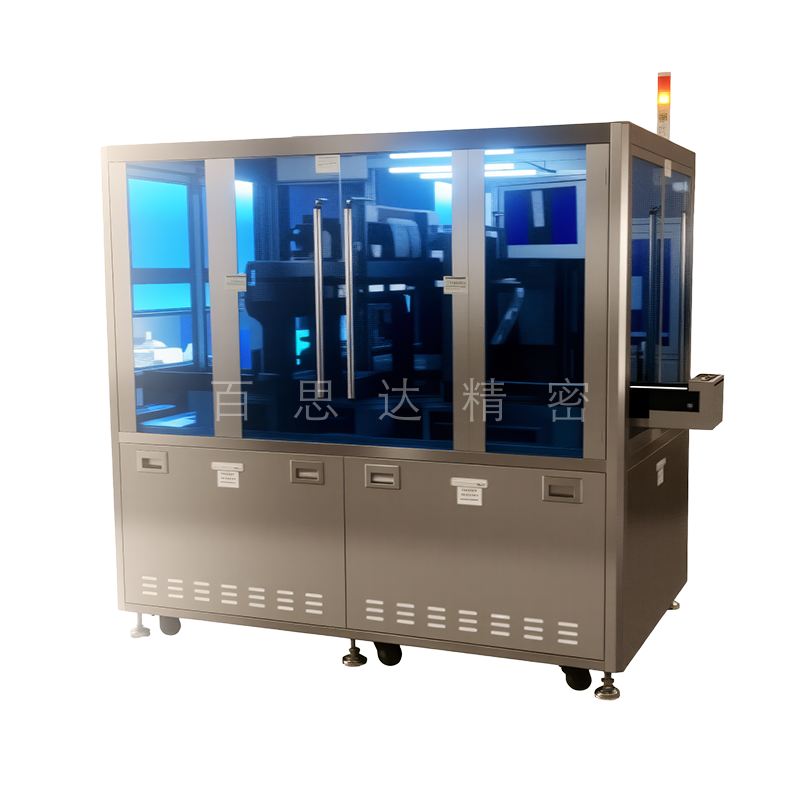
Traditional filling equipment has always faced three major challenges when handling high-viscosity and corrosive fluids: wall-adhesion losses erode product profits, fluctuating precision lowers yield rates, and cross-contamination poses significant quality-control risks. However, the three-way valve automatic filling system—anchored in its advanced layered dynamic filling technology—redefines the standards for complex fluid handling. It’s as if equipping both laboratories and production lines with a "fluid GPS," ensuring that every drop of colloid, lysis solution, or biological reagent reaches its intended destination with pinpoint accuracy. With layered filling, say goodbye to "filling anxiety" once and for all!

https://www.hzbestam.cn/product_detail/17.html
Core Technology: Industrial Aesthetics with Precise Control of Quantity
Multidimensional Precision Filling System
1. Motion Positioning System
Equipped with a high-precision chain plate transmission mechanism and fitted with a displacement sensor, it achieves a positioning accuracy of ±0.1mm per station.
2. Tripartite Collaborative Filling System
High-viscosity material unit: Equipped with a high-precision screw valve, achieving an accuracy of ±3% when dispensing volumes between 100 and 250 μl.
Corrosive Liquid Unit: Equipped with a self-calibrating peristaltic pump, the lysis solution filling volume is 0.8–1.4 ml with an error of ≤±5%.
Precision Fluid Cleaning Unit: Employs a ceramic pump to thoroughly remove residual liquids from within the tubing, ensuring consistent filling accuracy.
3. Intelligent Sealing Film System
① An integrated heat-sealing and die-cutting composite mechanism is used to produce heat-sealing film sheets with neat, wire-free edges; the positioning accuracy of the die-cut sheet edges is ±0.05mm.
② Perform secondary positioning on the product’s shape to eliminate accumulated errors, achieving a product positioning accuracy of ±0.05mm.
Intelligent Visual Filling Compensation System
The Visual Intelligence Filling Compensation System—more adaptable and responsive than ever! The visual inspection system dynamically calculates the filling workload in real time, based on the gaps within the three-way valve’s filling chamber and variations in the height of incoming materials—and then converts this into the corresponding volume of liquid to be filled.
Typical application scenarios
It is suitable for multi-liquid layer filling and offers significant advantages in products used for in vitro diagnostics, synthetic biology, and pre-filled tubes.
Press recommend
On the first day of the event, Booth M49 in Hall 8.1 immediately entered “crowd mode.” Customers from all over the country in the IVD and medical consumables sectors flocked to the booth, creating a vibrant and energetic atmosphere.
Exhibition Preview | Bestar Invites You to Join Us at CMEF – Booth M49, Hall 8.1
As a leading industry benchmark in China’s medical device sector—boasting top-tier scale and far-reaching influence—the 2026 China International Medical Equipment Fair (CMEF) is set to open with great fanfare at the Shanghai National Exhibition and Convention Center. With more than a decade of deep expertise in the precision manufacturing of biomedical machinery, Baisida Precision Machinery, a nationally recognized high-tech enterprise, will once again make a major appearance at this premier industry event. The company will showcase five core, independently developed automated systems, comprehensively demonstrating its robust capabilities in IVD in vitro diagnostics and the precision manufacturing of medical consumables. We warmly invite industry peers, as well as new and existing customers, to visit our booth to explore emerging opportunities and discuss the future of the industry together.
On February 11, the second day of the 2026 Arab International Medical Laboratory Instruments and Equipment Exhibition (WHX Labs 2026) kicked off at the Dubai World Trade Center, and booth H3.B39—located in the heart of the exhibition hall—continued to gain momentum.
WHX Labs 2026 | The First Exhibition of the Year—A Wonderful Start
From February 10 to 13, 2026, the Arab International Medical Laboratory Instruments and Equipment Exhibition (WHX Labs) will grandly open at the Dubai World Trade Center in the United Arab Emirates. As the largest laboratory equipment event in the Middle East, this year’s exhibition brings together over 800 leading medical enterprises from more than 40 countries worldwide, once again highlighting its status as an authoritative benchmark for technological innovation and industry trends in the global IVD sector.
The packaging and bagging process for traditional medical anesthesia masks has long been plagued by four major issues: bags sticking together, difficulties in automated bag retrieval, high rates of bag damage during insertion, easy detachment of UDI codes, and uneven sealing strength leading to compromised air-tightness. Each defective mask packaging not only erodes the already slim profit margins of enterprises but also increases the risk of product traceability and reduces the yield of good-quality products every time a UDI code comes loose or a sealing failure occurs. Moreover, every single handling step further diminishes production capacity.
Time flies, and the first month of 2026 has quietly arrived, bringing with it the warmth of the New Year. Looking back at the year 2025 that we’ve just bid farewell, as the challenges and opportunities in the IVD industry have intertwined and settled over time, we’ve chosen to embark on a heartwarming journey of gratitude and growth in Ganzhou, the ancient Song Dynasty city steeped in history. This is not merely a simple trip; it’s a carefully planned reunion of souls—a chance for us to rediscover the true meaning of partnership and gather the strength needed to move forward, amidst the green bricks and dark-tiled roofs of this ancient city and atop the misty peaks of Sanbai Mountain. As all things embrace renewal, let us unite our energies and set forth together.

Building B1, Xinghe Artificial Intelligence Industrial Park, 333 Zhong Kai 6th Road, Chen Jiang Street, Zhong Kai High-tech Zone, Huizhou City, Guangdong Province
Camille +86 13825453633
Ron Huang +86 13310861859
+86-752-3880396
fangqiaoyuan@hzbestam.com
ron@hzbestam.com



©Huizhoucity Bestam Precision Machine Co., Ltd. COPYRIGHT 2024